Introduction to Solar Energy
Solar energy is the continuous stream of radiant electromagnetic power emitted by the Sun, harnessed through engineered systems to convert photons into usable thermal, electrical or chemical energy for human applications.
Unlike fossil fuels, which store ancient solar energy in chemical form, modern solar technologies capture this energy directly at the point of arrival on Earth.
1. Scientific Basis of Solar Energy
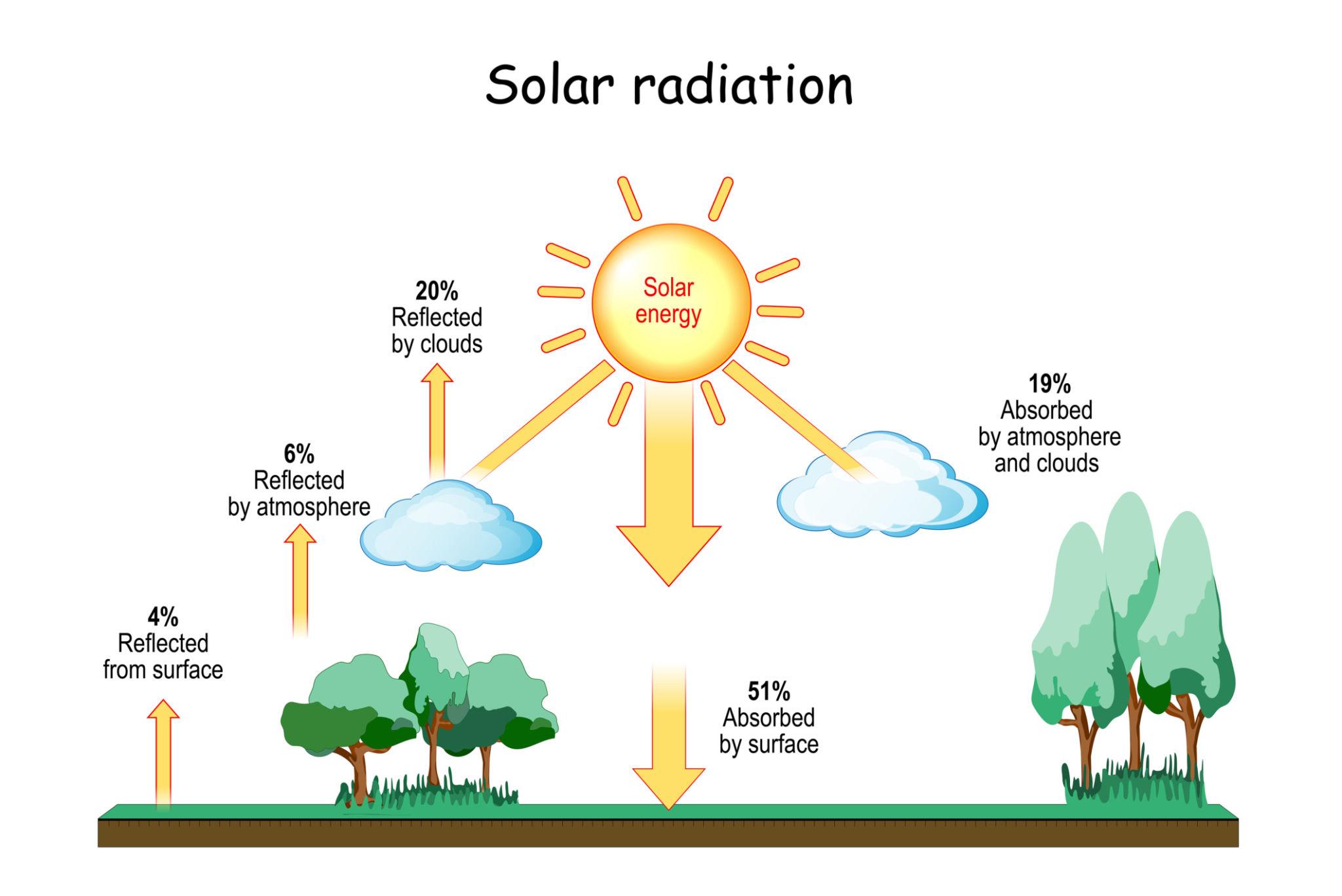
Solar energy originates from nuclear fusion reactions occurring in the Sun’s core, where hydrogen atoms fuse to form helium. This process releases vast amounts of energy that travel through space as electromagnetic radiation.
When this radiation reaches Earth:
- Approximately 30% is reflected back into space.
- The remaining portion is absorbed by land, oceans, and atmosphere.
- A fraction can be captured and converted into usable energy.
The solar spectrum includes:
- Ultraviolet (UV)
- Visible light
- Infrared (IR)
Most solar energy systems are optimized to capture visible and infrared wavelengths.
2. Solar Irradiance and Resource Availability
Solar irradiance refers to the power per unit area received from the Sun, typically measured in W/m². Under standard test conditions, average peak irradiance is approximately 1000 W/m2
The availability of solar energy depends on:
- Geographic location (latitude)
- Climate and cloud cover
- Seasonal variation
- Time of day
Regions near the equator receive higher annual solar insolation compared to higher latitudes.
3. Methods of Solar Energy Conversion
Solar energy can be converted into usable forms through three main mechanisms:
a. Photovoltaic (PV) Conversion
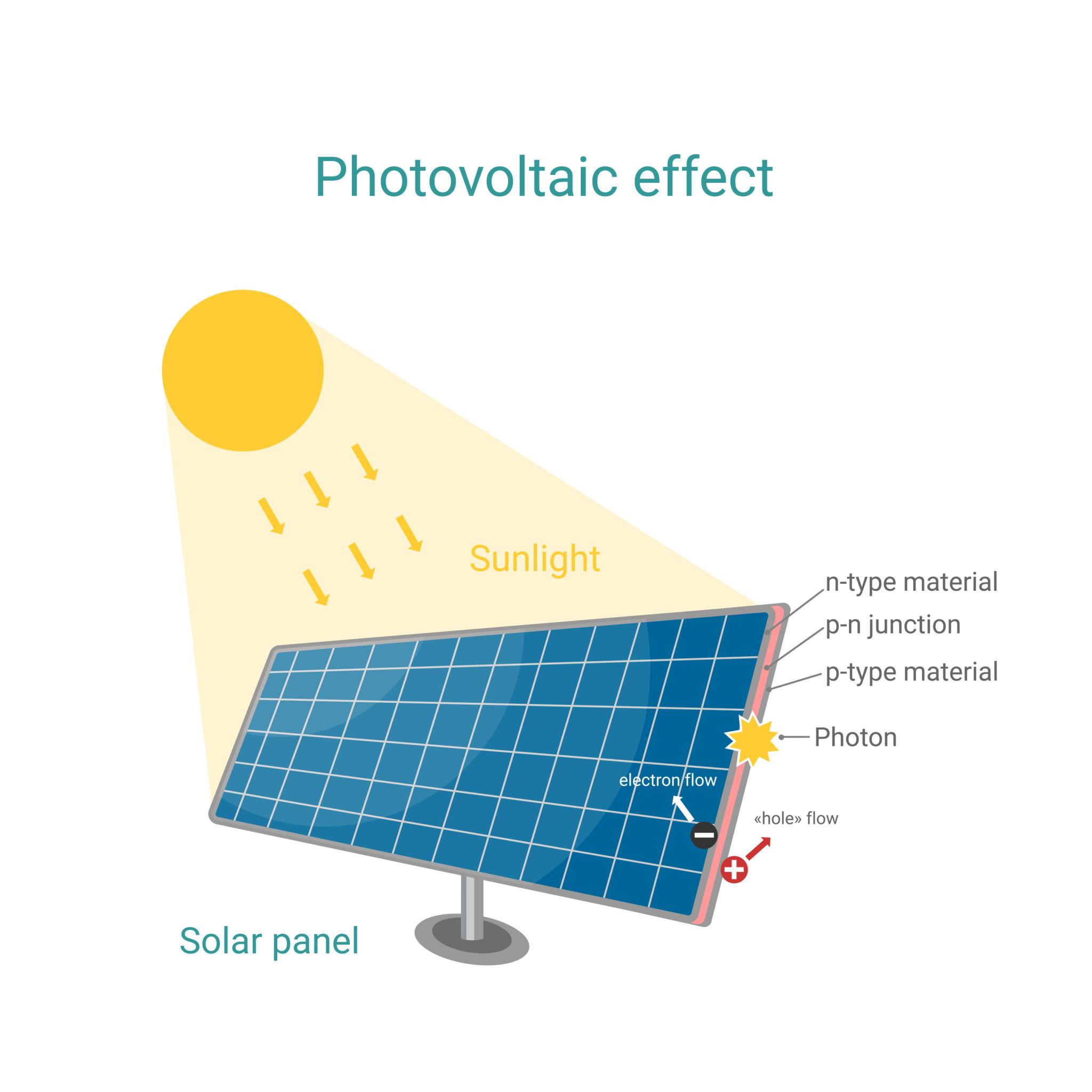
Photovoltaic cells convert sunlight directly into electricity using semiconductor materials such as silicon. When photons strike the material, electrons are excited and generate electric current.
b. Solar Thermal Conversion
Solar collectors absorb sunlight to produce heat, which can be used for:
- Water heating
- Space heating
- Industrial thermal processes
c. Concentrated Solar Power (CSP)
Mirrors or lenses concentrate sunlight to produce high temperatures, generating steam to drive turbines for electricity production.
4. Key Characteristics of Solar Energy
- Renewable and inexhaustible on a human timescale
- Environmentally sustainable during operation
- Modular and scalable (small rooftop to utility-scale plants)
- Intermittent and weather-dependent
5. Importance in Modern Energy Systems
Solar energy plays a critical role in:
- Reducing greenhouse gas emissions
- Enhancing energy security
- Supporting decentralized power generation
- Enabling electrification in remote areas
As global energy demand increases, solar energy is becoming one of the fastest-growing renewable energy technologies.
Solar energy represents a technologically accessible and environmentally responsible pathway for meeting future energy demands. Through advances in photovoltaic materials, energy storage systems, and grid integration techniques, solar power continues to evolve as a cornerstone of sustainable energy infrastructure.
Types of Solar Energy Systems
Solar energy systems are engineered configurations designed to capture solar radiation and convert it into usable thermal or electrical energy. These systems can be broadly classified based on conversion mechanism, system configuration and operational integration with the electrical grid. Each type differs in design complexity, efficiency, scalability and application domain.
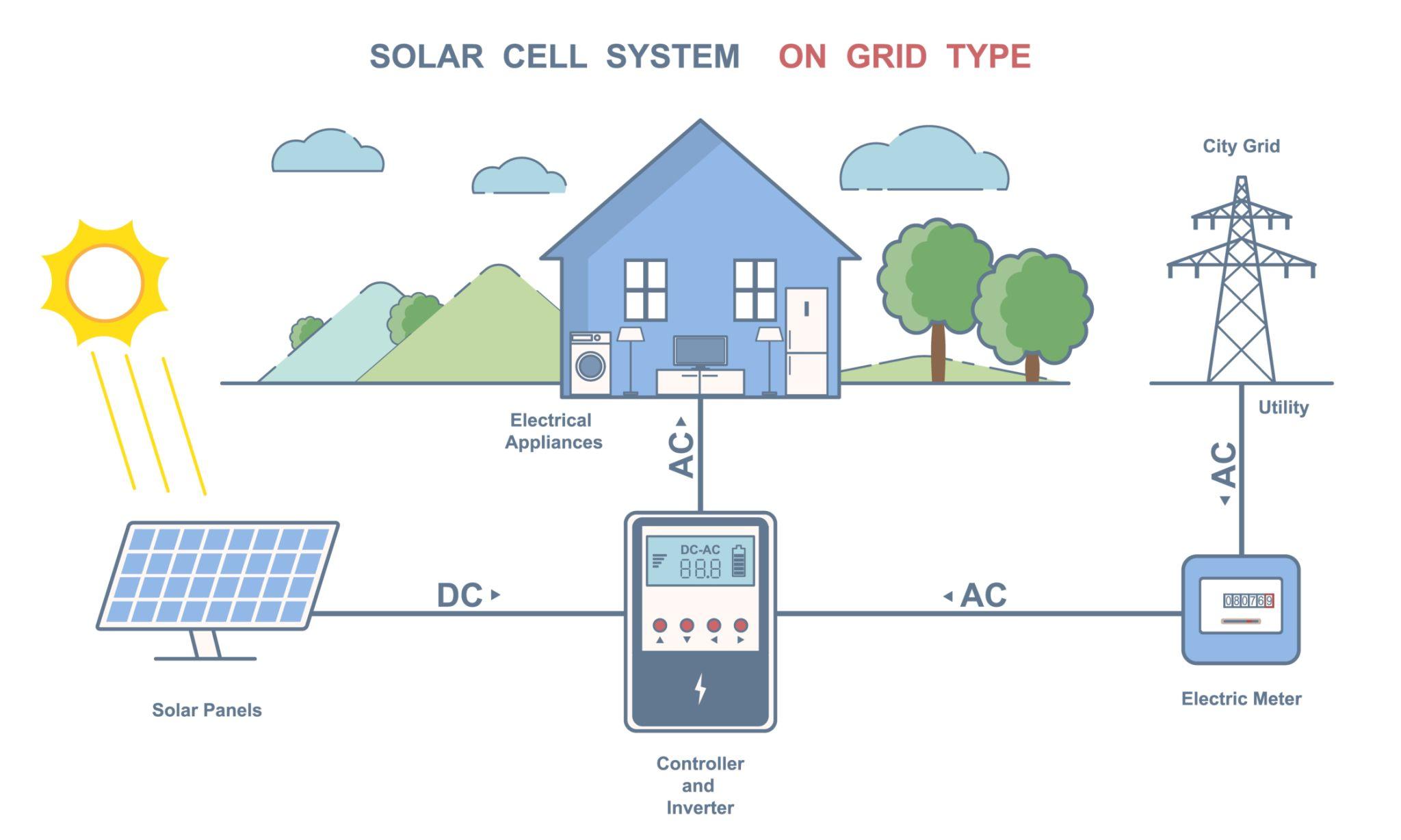
1. Grid-Connected (On-Grid) Photovoltaic Systems
Grid-connected photovoltaic (PV) systems operate in direct synchronization with the public utility grid. Electricity generated by solar modules is converted from direct current (DC) to alternating current (AC) through grid-tied inverters and supplied to the distribution network.
Key Characteristics:
- No battery storage (in most standard designs)
- Net metering capability
- High overall system efficiency due to minimal storage losses
- Suitable for urban and industrial installations
Technical Relevance:
These systems require compliance with grid codes, including voltage regulation, frequency synchronization and anti-islanding protection mechanisms.
2. Standalone (Off-Grid) Photovoltaic Systems
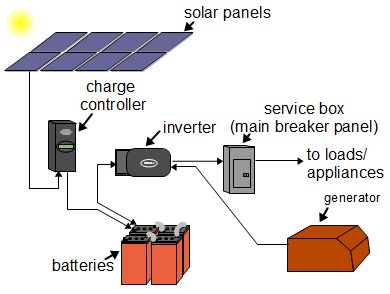
Standalone systems function independently of the utility grid and are typically deployed in remote or rural locations. They incorporate energy storage components, commonly battery banks, to ensure power availability during periods of low irradiance.
Key Components:
- Solar modules
- Charge controller
- Battery storage system
- Inverter (if AC loads are required)
Engineering Considerations:
System sizing requires accurate load estimation and autonomy period calculations to ensure reliability.
3. Hybrid Solar Energy Systems
Hybrid systems integrate solar power generation with additional energy sources such as wind turbines, diesel generators or grid supply. These configurations enhance reliability and mitigate intermittency issues.
Functional Advantages:
- Improved energy security
- Reduced dependence on a single source
- Optimized load management
Hybrid control strategies often utilize advanced power electronics and intelligent energy management systems (EMS).
4. Solar Thermal Systems
Solar thermal systems convert solar radiation into heat rather than electricity. These systems are categorized based on operating temperature:
a. Low-Temperature Systems
Used for domestic water heating and space heating through flat-plate or evacuated tube collectors.
b. Medium-Temperature Systems
Applied in industrial process heating and solar drying technologies.
c. High-Temperature Systems
Utilized in concentrated solar power (CSP) plants for electricity generation.
Solar thermal systems exhibit higher conversion efficiency compared to photovoltaic systems when heat energy is the desired output.
5. Concentrated Solar Power (CSP) Systems
CSP systems employ mirrors or lenses to concentrate sunlight onto a receiver, producing high-temperature thermal energy. This heat is used to generate steam that drives a turbine-generator set.
Major Configurations:
- Parabolic trough systems
- Solar tower systems
- Linear Fresnel reflectors
- Parabolic dish systems
CSP plants are typically deployed in regions with high direct normal irradiance (DNI).
6. Building-Integrated Photovoltaic (BIPV) Systems
BIPV systems incorporate photovoltaic materials directly into building components such as facades, rooftops and windows.
Engineering Benefits:
- Dual functionality (structural + energy generation)
- Reduced land usage
- Enhanced architectural integration
BIPV represents an advanced approach toward sustainable urban infrastructure.
7. Floating Solar Photovoltaic Systems
Floating solar systems are installed on water bodies such as reservoirs or lakes. These systems reduce land occupation and benefit from the cooling effect of water, which enhances panel efficiency.
Comparative Perspective
| System Type | Grid Dependency | Storage Required | Typical Application |
| On-Grid PV | Yes | No | Urban/Commercial |
| Off-Grid PV | No | Yes | Remote Areas |
| Hybrid System | Partial | Optional | Industrial/Rural |
| Solar Thermal | No | Thermal Storage | Heating Applications |
| CSP | Usually Grid | Thermal Storage | Utility-Scale Power |
Solar energy systems encompass diverse technological configurations tailored to specific operational and environmental requirements. From decentralized off-grid systems to large-scale concentrated solar power plants, each type contributes uniquely to sustainable energy generation. The selection of an appropriate system depends on geographic conditions, load demand, economic feasibility and integration requirements within existing energy infrastructure.
Working Principle of Solar Panels:
Solar panels operate on the photovoltaic effect, a solid-state phenomenon in which incident photons generate charge carriers within a semiconductor junction, producing direct electrical current. The operational mechanism integrates principles of quantum physics, semiconductor theory and electrical engineering to convert solar radiation into usable electrical energy with no moving parts.
1. Fundamental Physical Mechanism: The Photovoltaic Effect
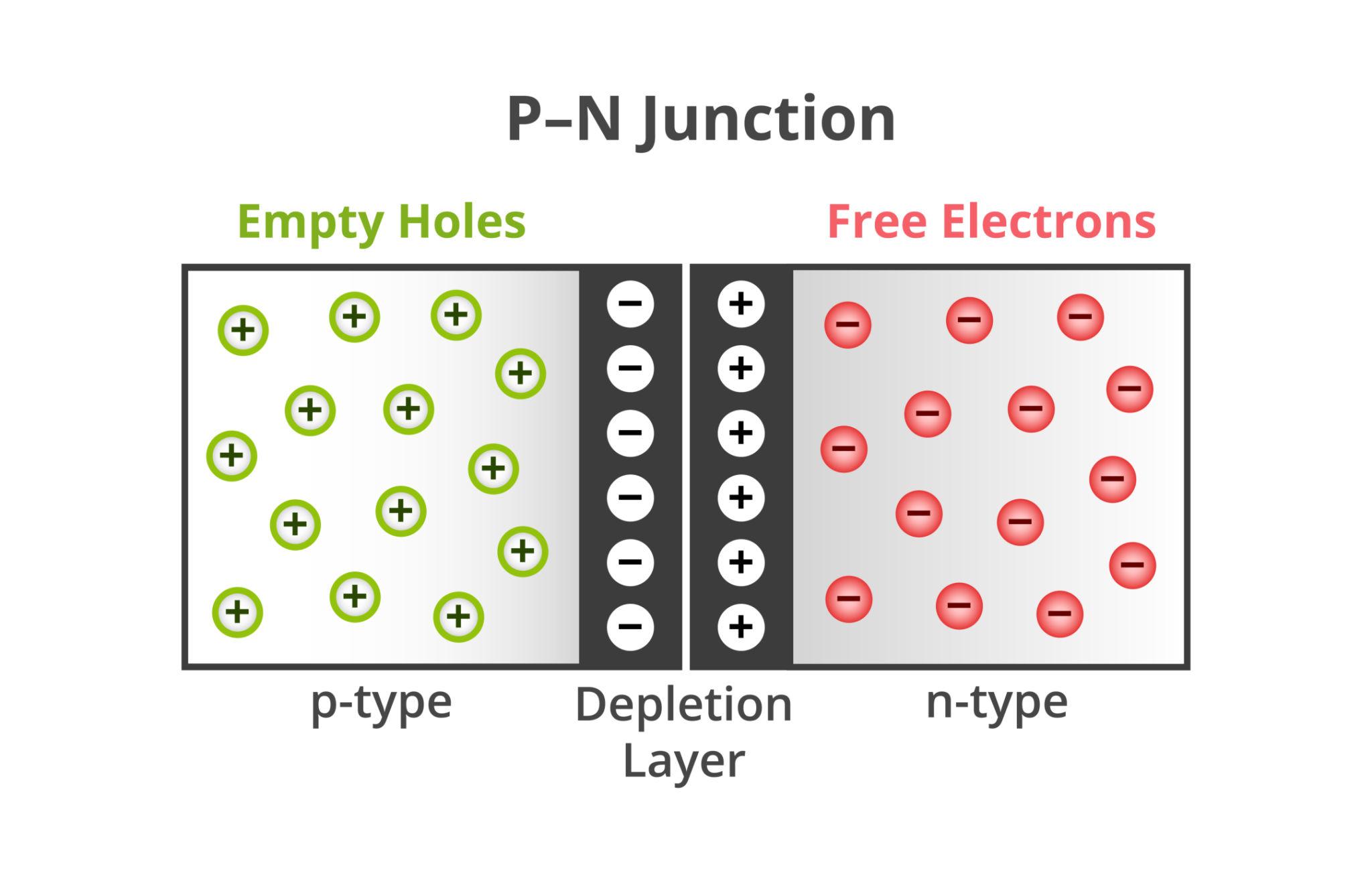
The working principle of a solar panel is governed by the photovoltaic effect, first observed in 1839. At the core of this mechanism is a p–n junction semiconductor, typically fabricated from crystalline silicon.
When sunlight strikes the semiconductor surface:
- Photons with energy equal to or greater than the material’s bandgap are absorbed.
- Absorption excites electrons from the valence band to the conduction band.
- This transition generates electron–hole pairs.
The built-in electric field at the p–n junction separates these charge carriers:
- Electrons move toward the n-type region.
- Holes migrate toward the p-type region.
This charge separation creates a potential difference, forming the basis of electrical power generation.
2. Structure of a Solar Cell
A typical crystalline silicon solar cell consists of multiple engineered layers:
- Anti-reflective coating – minimizes photon loss due to reflection.
- Front contact grid – collects generated electrons.
- n-type semiconductor layer – electron-rich region.
- p-type semiconductor layer – hole-rich region.
- Back contact layer – completes the electrical circuit.
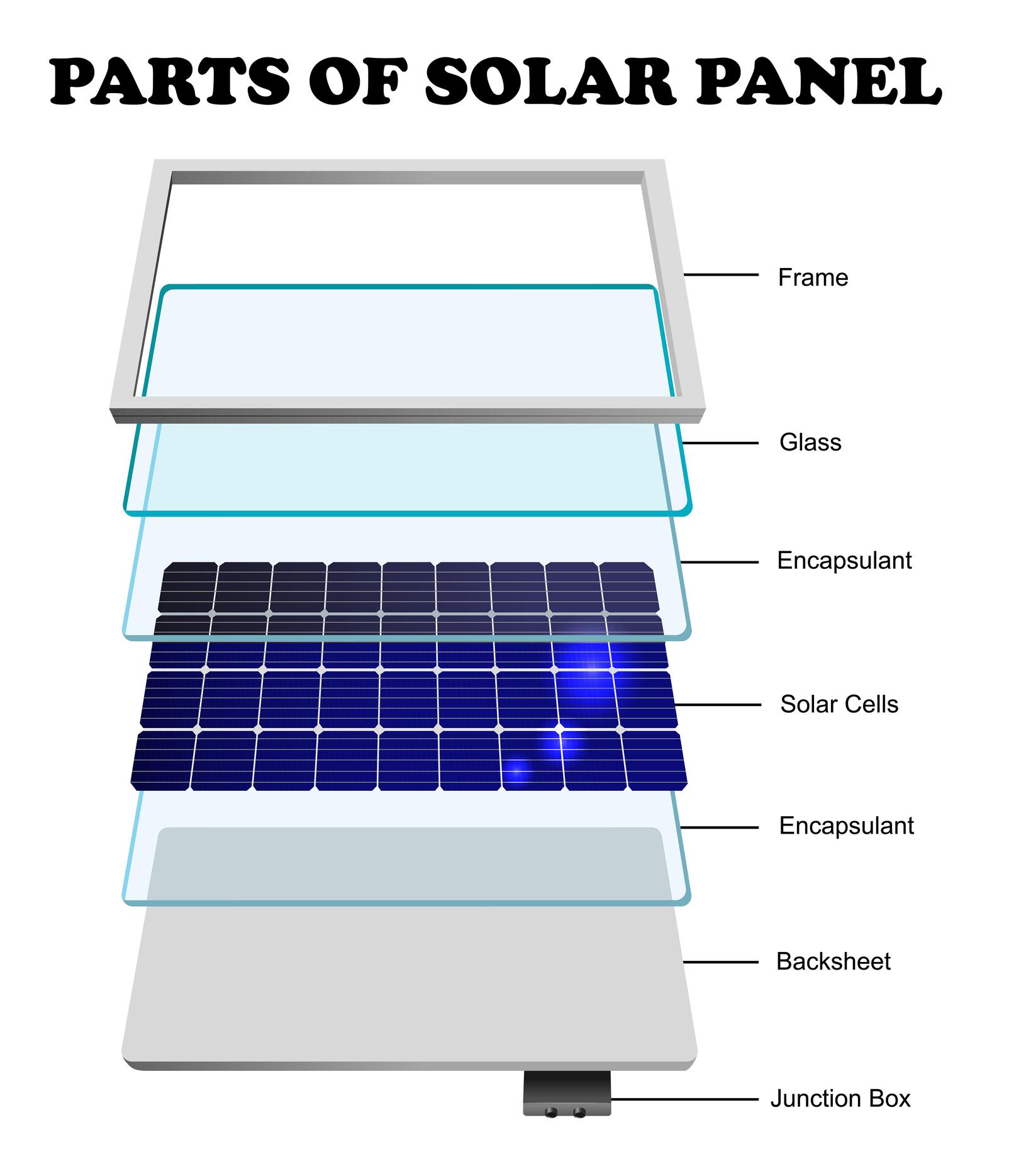
Multiple solar cells are interconnected in series and parallel configurations to form a solar module (panel), increasing voltage and current output.
3. Charge Carrier Dynamics and Current Generation
The generation of current depends on three critical processes:
a. Photon Absorption
Only photons with sufficient energy (E ≥ Eg) contribute to charge carrier creation.
b. Carrier Separation
The internal electric field at the depletion region prevents recombination by driving carriers in opposite directions.
c. External Circuit Flow
When the circuit is closed, electrons flow through the external load from the n-side to the p-side, delivering electrical power.
The resulting current is direct current (DC) in nature.
4. Electrical Characteristics of Solar Panels
The performance of a solar panel is described by its current–voltage (I–V) characteristics.
Key parameters include:
- Open-circuit voltage (Voc) – voltage at zero current
- Short-circuit current (Isc) – current at zero voltage
- Maximum power point (MPP) – optimal operating point
- Fill factor (FF) – quality indicator of the solar cell
- Efficiency (η) – ratio of electrical output power to incident solar power
The maximum power output is expressed as: Pmax = Vmp x Imp
Where, Vmp and Imp correspond to voltage and current at the maximum power point.
5. Influence of Environmental Factors
Solar panel performance is affected by:
- Irradiance level – directly proportional to current output
- Temperature – higher temperatures reduce voltage and efficiency
- Angle of incidence – determines effective photon absorption
- Shading and dust accumulation – cause mismatch losses
Advanced systems incorporate Maximum Power Point Tracking (MPPT) to dynamically optimize energy extraction under varying conditions.
6. Energy Conversion Efficiency and Loss Mechanisms
Not all incident solar energy is converted into electricity. Losses occur due to:
- Reflection losses
- Thermalization losses (excess photon energy converted to heat)
- Recombination losses
- Resistive losses in contacts and interconnections
Modern silicon panels typically achieve efficiencies between 18%–23%, while advanced technologies (e.g., multi-junction cells) exceed 40% under concentrated conditions.
7. System-Level Operation
In practical applications:
- Solar panels generate DC electricity.
- A charge controller regulates voltage (in standalone systems).
- An inverter converts DC to AC for grid or household use.
- Energy may be stored in batteries or exported to the utility grid.
Thus, the working principle extends beyond the cell level to integrated power electronic systems.
The operation of solar panels is rooted in semiconductor physics and the controlled manipulation of charge carriers within a p–n junction. Through photon absorption, carrier excitation, and electric field–driven separation, solar panels transform electromagnetic radiation into electrical power. Continuous advancements in materials science, nanotechnology, and power electronics are enhancing efficiency and expanding the technological frontier of photovoltaic systems.
Components of a Solar Power System:
A solar power system is an integrated energy conversion and management framework designed to transform solar radiation into usable electrical power. Its architecture combines photovoltaic generation, power conditioning, energy storage, protection mechanisms and monitoring subsystems. Each component plays a critical role in ensuring efficiency, reliability, safety and grid compatibility.
1. Photovoltaic (PV) Modules
Photovoltaic modules constitute the primary energy conversion unit of the system. They are composed of interconnected solar cells arranged in series and parallel configurations to achieve desired voltage and current levels.
Technical Role:
- Convert incident solar irradiance into direct current (DC) electricity.
- Provide system voltage typically ranging from 12V to 600V (depending on configuration).
Engineering Considerations:
- Module efficiency
- Temperature coefficient
- Degradation rate
- Mechanical durability
The output power of a PV module is influenced by irradiance intensity and cell temperature, as described by its current–voltage (I–V) characteristics.
2. Solar Inverter
The inverter is the central power electronic interface of the system. Since PV modules generate DC power, the inverter converts it into alternating current (AC) compatible with household loads and grid infrastructure.
Functional Responsibilities:
- DC to AC conversion
- Frequency and voltage regulation
- Synchronization with grid parameters (in grid-tied systems)
- Harmonic distortion minimization
Modern inverters integrate Maximum Power Point Tracking (MPPT) algorithms to optimize real-time energy extraction.
3. Charge Controller
The charge controller regulates the flow of electricity between PV modules and battery storage (in off-grid or hybrid systems). It prevents battery overcharging and excessive discharge.
Types:
- PWM (Pulse Width Modulation) controllers
- MPPT (Maximum Power Point Tracking) controllers
MPPT controllers enhance system efficiency by dynamically adjusting operating voltage to maximize power output.
4. Battery Storage System
Energy storage systems ensure power availability during periods of low or zero solar irradiance (e.g., nighttime or cloudy conditions).
Common Technologies:
- Lead-acid batteries
- Lithium-ion batteries
- Lithium iron phosphate (LiFePO₄)
Technical Parameters:
- Depth of discharge (DoD)
- Cycle life
- Energy density
- Round-trip efficiency
Battery capacity is typically measured in ampere-hours (Ah) or kilowatt-hours (kWh) and proper sizing is essential for system reliability.
5. Mounting and Tracking Structures
Mounting systems provide mechanical support and optimal tilt orientation for solar panels. These structures must withstand environmental loads such as wind, snow and seismic activity.
Configurations:
- Fixed-tilt structures
- Single-axis trackers
- Dual-axis trackers
Solar tracking systems increase energy yield by maintaining optimal alignment with the sun’s trajectory.
6. Electrical Wiring and Protection Devices
Electrical interconnections ensure safe and efficient power transmission between system components.
Key Elements:
- DC and AC cabling
- Combiner boxes
- Circuit breakers and fuses
- Surge protection devices
- Grounding systems
Proper protection design prevents short circuits, overcurrent faults and lightning-induced damage.
7. Monitoring and Control Systems
Advanced solar installations incorporate digital monitoring platforms that track performance metrics such as:
- Real-time power output
- Energy production data
- Voltage and current levels
- Fault detection alerts
Supervisory Control and Data Acquisition (SCADA) systems are commonly used in large-scale solar plants for centralized monitoring.
8. Grid Interface Equipment (For Grid-Connected Systems)
In grid-tied systems, additional equipment ensures compliance with utility standards:
- Net meter
- Grid protection relays
- Anti-islanding devices
These components enable safe bidirectional energy flow between the solar installation and the utility grid.
Integrated System Operation
A solar power system operates as a coordinated energy conversion chain:
- PV modules generate DC electricity.
- The charge controller regulates voltage (if storage is present).
- Batteries store excess energy.
- The inverter converts DC to AC.
- Protection devices ensure operational safety.
- Monitoring systems optimize performance and detect anomalies.
The overall efficiency of the system depends on the performance of each individual component and the quality of system design.
A solar power system is a multidisciplinary integration of semiconductor devices, power electronics, energy storage technology, structural engineering and control systems. Understanding each component’s technical function and interaction is essential for optimizing system performance, ensuring reliability and achieving long-term sustainability in renewable energy applications.
Advantages and Limitations of Solar Energy:
Solar energy represents one of the most rapidly expanding renewable energy technologies in modern power systems. Its adoption is driven by environmental concerns, technological advancements, and declining installation costs. However, despite its numerous benefits, solar energy also presents technical, economic and operational challenges.
1. Advantages of Solar Energy
1.1 Renewable and Inexhaustible Resource
Solar energy originates from continuous nuclear fusion reactions within the Sun, providing a virtually unlimited energy supply on a human timescale. Unlike fossil fuels, solar energy does not deplete finite geological reserves.
1.2 Low Operational Environmental Impact
During operation, photovoltaic (PV) systems generate electricity without emitting greenhouse gases or air pollutants. This significantly reduces carbon intensity compared to coal or natural gas power plants.
Environmental Significance:
- Reduction in CO₂ emissions
- Decreased air pollution
- Mitigation of climate change impacts
1.3 Modularity and Scalability
Solar power systems are inherently modular. Installations can range from small rooftop systems (kilowatt scale) to utility-scale solar farms (megawatt or gigawatt scale). This flexibility enables decentralized power generation and supports distributed energy systems.
1.4 Low Operating and Maintenance Costs
Solar systems have no moving mechanical parts (in standard PV systems), resulting in minimal wear and reduced maintenance requirements. After initial installation, operational costs are relatively low.
1.5 Energy Independence and Decentralization
Solar energy allows households, industries and communities to generate electricity locally. This reduces dependence on centralized power plants and imported fuels, enhancing energy security.
1.6 Technological Advancements and Efficiency Improvements
Continuous research in materials science and semiconductor engineering has led to improved solar cell efficiencies and reduced manufacturing costs. Innovations such as bifacial modules, perovskite cells and advanced inverters enhance overall system performance.
2. Limitations of Solar Energy
2.1 Intermittency and Variability
Solar power generation depends on solar irradiance, which varies with time of day, season and weather conditions. Energy production ceases at night and decreases during cloudy conditions.
Technical Implication:
Requires energy storage systems or grid support to maintain supply reliability.
2.2 Energy Storage Requirements
To ensure continuous power supply, especially in off-grid systems, batteries or other storage technologies are required. Energy storage increases system cost and introduces additional efficiency losses.
2.3 High Initial Capital Investment
Although long-term costs are low, the upfront investment for solar panels, inverters, installation, and storage systems can be substantial. Economic feasibility depends on government incentives, tariffs and payback period analysis.
2.4 Land Use and Spatial Constraints
Large-scale solar farms require significant land area. In densely populated or agriculturally important regions, land allocation can be challenging.
2.5 Efficiency Limitations and Energy Conversion Losses
Commercial silicon-based solar panels typically achieve efficiencies between 18% and 23%. Losses occur due to:
- Reflection losses
- Thermal losses
- Electrical resistive losses
- Recombination losses
Thus, a considerable portion of incident solar radiation is not converted into electrical energy.
2.6 Environmental Impact of Manufacturing and Disposal
The production of solar panels involves energy-intensive processes and the use of materials such as silicon, silver and rare metals. Improper disposal of panels at end-of-life may pose environmental concerns.
3. Comparative Assessment
| Aspect | Advantage | Limitation |
| Resource Availability | Abundant and renewable | Location-dependent irradiance |
| Environmental Impact | Low operational emissions | Manufacturing footprint |
| Cost Structure | Low operating cost | High initial investment |
| Reliability | Suitable for distributed generation | Intermittent output |
Solar energy offers substantial environmental and economic benefits, including renewable availability, low emissions and scalability. However, technical constraints such as intermittency, storage requirements and efficiency limitations must be addressed through advanced system design, grid integration strategies and continued research in energy storage and photovoltaic materials.
A balanced evaluation indicates that while solar energy is not without challenges, its advantages significantly support its role as a cornerstone of sustainable energy transition.
Applications of Solar Energy in Daily Life:
Solar energy has transitioned from a large-scale utility resource to an embedded component of daily human activity. Through advancements in photovoltaic conversion, solar thermal engineering and decentralized power electronics, solar technology now supports residential, commercial, agricultural and urban functions.
1. Residential Electricity Generation
One of the most widespread daily applications of solar energy is rooftop photovoltaic (PV) electricity generation. Solar panels installed on residential buildings convert solar irradiance into direct current (DC), which is then inverted into alternating current (AC) for household use.
Functional Outcomes:
- Powering lighting systems
- Operating home appliances
- Charging electronic devices
- Supporting electric vehicle (EV) charging
Grid-connected systems may export surplus energy, contributing to distributed generation models and reducing transmission losses.
2. Solar Water Heating Systems
Solar thermal collectors are extensively used for domestic hot water production. These systems absorb solar radiation and transfer thermal energy to water through heat exchangers.
Technical Advantages:
- Higher thermal efficiency compared to PV conversion
- Reduced electricity or gas consumption
- Lower operational cost over long-term use
Common configurations include flat-plate collectors and evacuated tube collectors.
3. Solar-Powered Lighting
Solar lighting systems combine small PV panels, charge controllers, batteries and LED luminaires. These systems are commonly used for:
- Outdoor garden lighting
- Street lighting
- Rural electrification
- Emergency backup lighting
Energy is stored during daylight and discharged at night, providing autonomous operation without grid dependency.
4. Solar Cooking and Food Processing
Solar cookers utilize reflective or insulated enclosures to concentrate sunlight and generate sufficient heat for cooking. This application is particularly significant in regions with limited access to conventional fuels.
In addition, solar dryers are employed for:
- Agricultural crop preservation
- Food dehydration
- Reduction of post-harvest losses
These applications minimize reliance on biomass fuels and reduce indoor air pollution.
5. Solar Irrigation and Water Pumping
Photovoltaic-powered water pumps are increasingly used in agriculture. Solar arrays drive DC or AC pumps to extract groundwater for irrigation.
Engineering Benefits:
- Eliminates fuel dependency
- Reduces operational costs
- Enables irrigation in remote areas
System sizing depends on water table depth, pump capacity, and solar irradiance availability.
6. Portable Solar Devices
Solar technology is integrated into portable consumer products such as:
- Solar power banks
- Solar chargers
- Solar backpacks
- Solar lanterns
These devices utilize compact PV modules to provide mobility and off-grid power solutions.
7. Solar Ventilation and Cooling
Solar-driven ventilation systems use photovoltaic power to operate fans, improving indoor air circulation. In advanced configurations, solar energy supports air conditioning systems through:
- Solar absorption cooling systems
- Hybrid PV-powered HVAC units
These systems contribute to energy-efficient building design.
8. Building-Integrated Photovoltaics (BIPV)
Modern architecture incorporates photovoltaic materials directly into building elements such as facades, windows, and roofs. This dual-purpose design integrates structural and energy-generating functions.
BIPV enhances sustainability while reducing the need for additional land resources.
9. Solar Transportation Support
Although transportation primarily relies on grid power, solar energy supports mobility through:
- Solar charging stations for electric vehicles
- Solar-powered traffic signals
- Solar-powered public information boards
These applications promote energy decentralization in urban infrastructure.
10. Environmental and Societal Impact in Daily Context
The integration of solar energy into daily life contributes to:
- Reduced carbon footprint
- Lower electricity bills
- Increased energy autonomy
- Sustainable urban development
At the micro-level, households become active participants in energy generation rather than passive consumers.